
I tell these stories because they matter—not just to me, but to anyone who has ever felt trapped by the weight of the past. We inherit so much more than just genetics; we inherit beliefs, behaviors, and patterns that shape our lives, often without question. Some of these traditions are beautiful, grounding us in culture and family. Others, however, are chains—silent and invisible, passed down so seamlessly that we mistake them for truth.
This is a story of unlearning. Of questioning what was forcefully handed to me and deciding what I want to carry forward. It’s about unveiling the hard truths, the generational trauma that lingers in the spaces between words and the silence of things left unsaid. But it’s also about relearning—about discovering who I am outside of those inherited and innocent wounds, about creating a new foundation built on healing, not hurt and still able to live the precious life God gave.
These stories aren’t just mine. They belong to anyone who has ever dared to break the cycle, to rewrite their own narrative, to anyone who doesn’t know how to say “NO” or “STOP”, to choose something different—even when “different” feels terrifying.
So, this is where it begins.

The first time I knew what darkness felt like, I was about five or six years old. One minute, I was standing in the living room—my stepfather in front of me, beer in his left hand, my stepsisters around me—and the next, I was waking up in a corner on the floor. My stepfather was watching TV like nothing had happened. I looked down. Blood. Everywhere. On my clothes, on my face. He glanced at me, uninterested, and said, “Yeah, go.”
So, I stood up and walked away. I don’t remember crying but I remember what that blood tasted like.
That was the beginning—one of many dark places.
By sixteen, I thought I was hot shit. Emancipated. On my own. Free. I met a guy. He was sweet, cool, everything I thought I wanted. Years passed. Then I turned twenty-three, and “cool” turned into veins bulging out of his red neck and forehead, spit flying as he screamed. I started shaking, stumbling over my words, trying to figure out what I had done wrong to make him act this way. I yelled at him, “STOP”!
Then—bam. My back hit something that made a crash. I looked down. The mirror. It shattered around me, tiny pieces of myself scattered on the floor. That’s all I saw. Before I could even breathe, his hands were around my throat, squeezing, crushing. I thought my bones would crack, that this was it. And then he let go.
He dropped to his knees, wrapped his arms around my legs, sobbing, begging, promising it would never happen again. A few minutes later, we were in bed. And I told myself it was love.
I don’t remember the words that were said but I remember the numbness in my mind.
By twenty-five, I was lying in a hospital bed, my heart restarted by someone else’s hands. That was the moment I made a plan. No more.
Regrettably, for the next year, I played Russian roulette with my life, confused and wondering why women were meant to be beaten down. Was this the fate for every woman, or was it just me?
A year later, in the blood pool of the last fight brought an unexpected stand. This time the gun was in my hand. After that, I started running and hiding, because at least that way, I had a chance at survival.

Now, don’t get it twisted. I wasn’t an angel after these moments. I was an asshole. A selfish, manipulative, lying, cheating, stealing asshole. People hated me, and for good reason. Until rock bottom ran my ass over, literally.
Through all of it, my best friend stood by my side. He was one of a kind—funny, creative, giving, the type of person who’d give you the shirt off his back without a second thought. Most importantly, I could trust him. He had my back, one hundred percent (R.I.P).
But when he got mad, he would shake. His jaw would clench. And even though I knew, without a doubt, that he would never hurt me, my body didn’t get the memo. My anxiety would spike, panic would creep in, and before I could think, I’d step in, trying to fix everything. Smooth it over. Solve the problem. Because if I was in control, I was safe. Right?
Wrong.
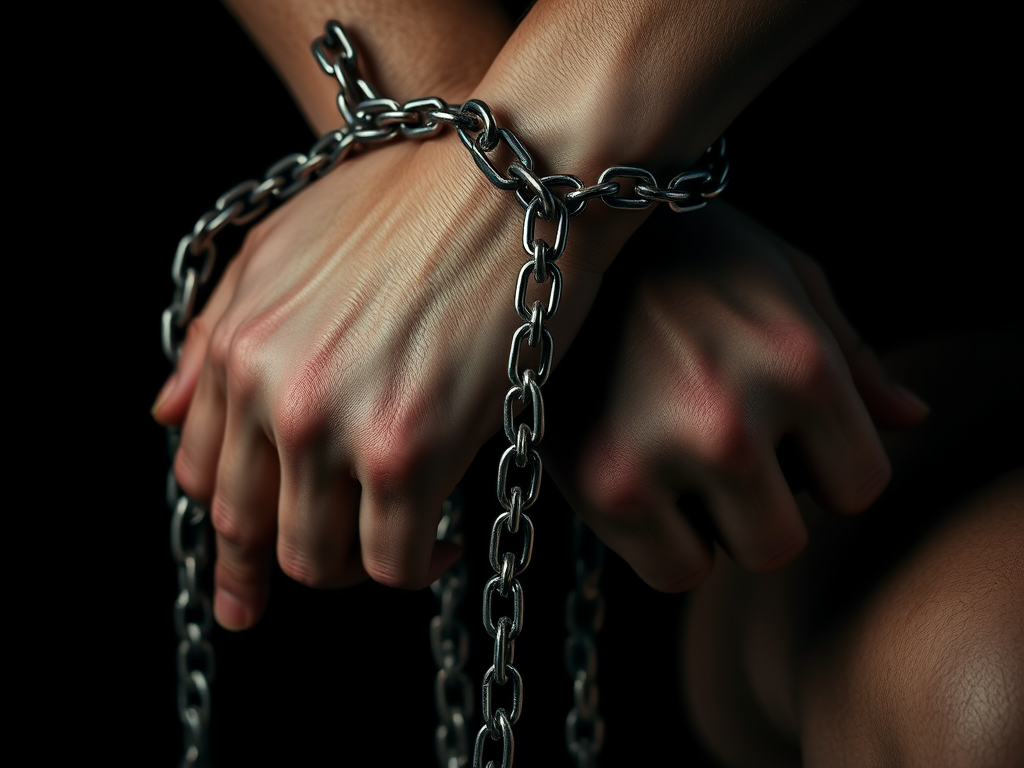
I was living in chains—silent and invisible, passed down so seamlessly that I mistake them for truth. I was at a point where sobriety met clarity, so I started questioning what was forcefully handed to me. Then and only then did I decide what I wanted to carry forward. I unveiled hard truths.
One beautiful day, a situation arose that triggered my thoughts. I still felt that old panic rise, but instead of jumping in to fix things, I took a step back and took a breath. Looked at him and said, “Hey, I can see you’re getting frustrated. Can I help?” I knew if I needed to I could step away until I felt safe to come back.
And it worked.
That’s the thing about trauma—it teaches you how to survive, not how to live. You learn to adapt to the chaos, to push through pain, to bury your fears so deep that you forget what it feels like to feel anything other than just making it through. For years, I didn’t know any other way. Every day was a tightrope walk, constantly balancing between falling apart and holding everything together. But the more I kept unveiling, the more I realized something.
There’s a difference between surviving and living. Surviving is about managing the wounds, learning to live with them, but never healing. Living, though, that’s about something else entirely. It’s about allowing yourself to feel again, to hope, to love, and to trust that the future can be different, even if your past was full of darkness.
As I sit here, reflecting on these stories, the healing, and the mess I was in between, I realize something—I never truly understood what it meant to live until I made the choice to discover who I am. Some days, I felt unstoppable, like I was rewriting my story in real time. Other days, the weight of old wounds tried to convince me I’d never escape them. But I kept going. I kept choosing to unlearn the patterns that weren’t mine to carry. To forgive them and myself.
The generational trauma that started with me, stops with me.
I couldn’t have done any of it without God. Because when I had no idea how to move forward, when I was convinced I was too broken, too tired, or too far gone—He already saw me whole. He already saw me free.
And I am free.
I Am Katrina 02/05/2025
